

In this article
Artificial Intelligence Is Changing Our Lives: Are We Entering a Smarter Future or a Completely Different World?
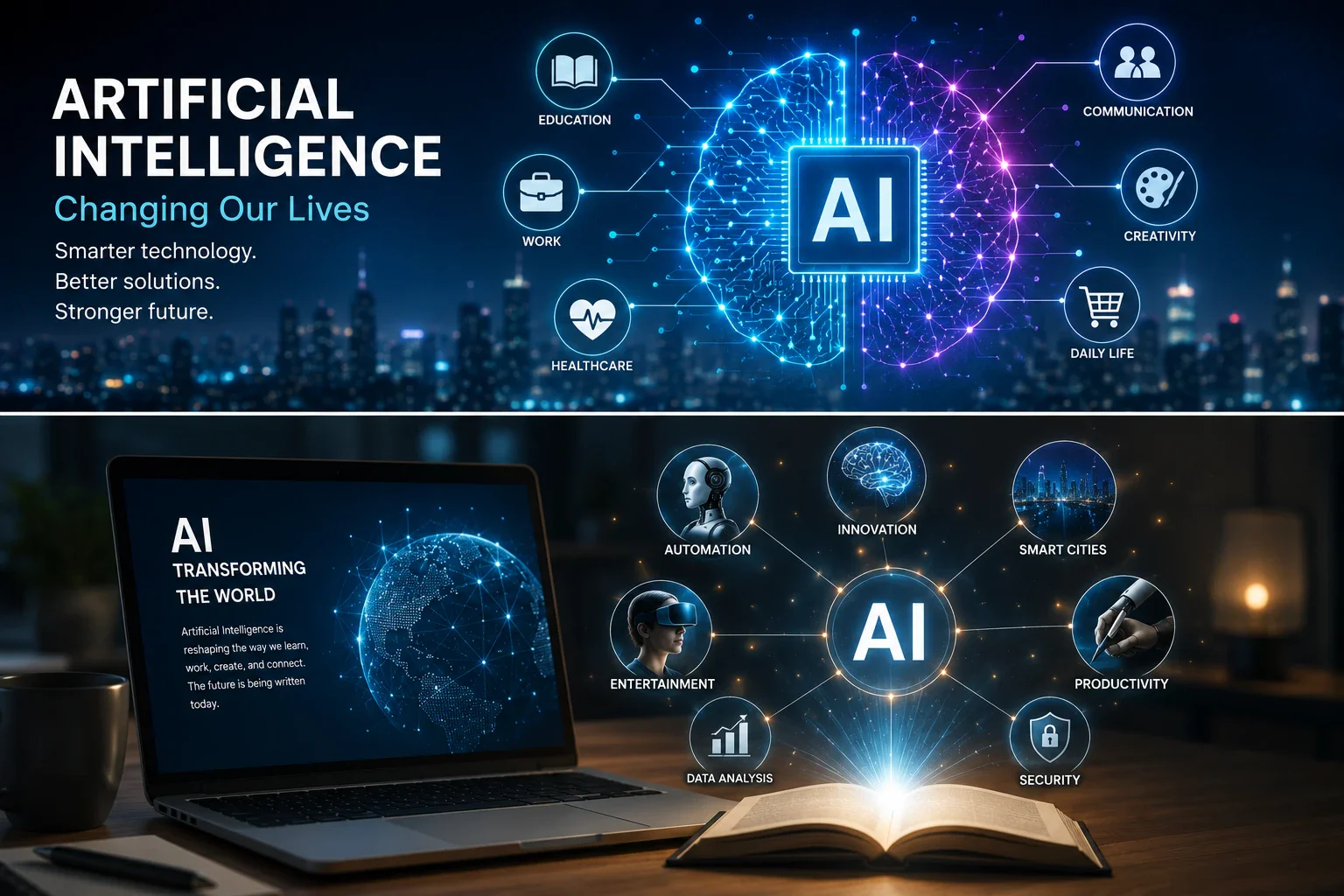
Just a few years ago, artificial intelligence seemed like something that belonged mainly to science-fiction movies and futuristic laboratories. Today, AI has become part of everyday life. People use it to search for information, write text, translate languages, generate images, learn new skills, organize their work, and explore ideas in seconds. As this technology continues to develop, the real question is no longer whether artificial intelligence will change our lives. It already has. The bigger question is how deeply it will change the way we think, work, communicate, and create.
Artificial intelligence refers to technologies that can process information and perform tasks that previously required certain forms of human intelligence, such as recognizing patterns, understanding language, analyzing data, and generating content. The rise of generative AI has made these capabilities accessible to ordinary users, allowing people to create text, images, audio, and other forms of content with unprecedented speed.
UNESCO has highlighted the growing influence of AI on culture, creativity, education, communication, and access to information. This means that artificial intelligence is no longer simply a technological development. It is becoming a social and cultural force that can influence how people create, learn, communicate, and understand the world around them. �
يونسكو +١
One of the most noticeable changes can be seen in the way people access information. In the past, finding an answer could require searching through books, websites, and multiple sources. Today, a person can ask an AI system a question and receive an organized response within seconds. This can save time and make knowledge more accessible, but it also creates a new responsibility: learning how to verify information.
AI systems can produce answers that sound confident and convincing, but confidence does not always mean accuracy. This makes critical thinking and digital literacy increasingly important. People need to understand that AI-generated information may contain mistakes, missing context, or misleading conclusions, especially when the system is asked about complex or rapidly changing subjects.
Education is another area being transformed by artificial intelligence. Students can use AI tools to explain difficult concepts, generate examples, practice languages, organize ideas, or receive help with research. Teachers can also use technology to prepare educational materials and explore different approaches to explaining difficult subjects.
However, using AI in education does not necessarily mean allowing technology to replace learning. The more valuable approach may be to use AI as a tool that supports human thinking rather than replacing it. A student who simply copies an AI-generated answer may finish an assignment, but may miss the deeper learning process that comes from researching, questioning, analyzing, and forming an independent conclusion.
This leads to one of the biggest questions surrounding artificial intelligence: does technology make people smarter, or does it make them more dependent on technology? There is no simple answer. AI can expand access to knowledge, improve productivity, and help people organize complex information. At the same time, excessive dependence may reduce the motivation to think, research, and verify information independently. The real advantage therefore comes from knowing when and how to use AI.
The workplace is also changing. Some repetitive tasks can increasingly be supported or automated by AI systems, while other applications can help workers analyze information, draft documents, organize data, and develop ideas. These changes create opportunities for productivity, but they also raise legitimate questions about employment, skills, and the future structure of different professions.
Recent public opinion research shows how quickly attitudes toward AI are evolving. A 2026 Pew Research Center survey found that about half of U.S. adults reported using AI chatbots, while many respondents expressed concerns about AI’s effects on employment, privacy, and society. �
Pew Research Center
Yet artificial intelligence should not be viewed only as a technology designed to replace people. It can also become a powerful tool for expanding human capabilities. In the cultural sector, for example, AI can help digitize historical archives, analyze cultural materials, support heritage preservation, and make cultural collections accessible to wider audiences.
UNESCO has specifically explored the role of AI in culture and has highlighted opportunities related to cultural heritage, education, artistic creation, and creative industries. The organization has also emphasized that AI should enhance human creativity rather than eliminate the human element at the center of cultural expression. �
يونسكو +١
The Arab world is also becoming part of this transformation. UNESCO has discussed the use of AI in the Arab region for heritage preservation, education, archaeology, and creative industries. These applications demonstrate that AI is not only a technology developed elsewhere and consumed by Arab societies; it can also become a tool for preserving and developing local cultural knowledge. �
يونسكو
But the rapid expansion of AI also creates serious challenges. When machines can produce enormous amounts of content in a short time, cultural diversity and originality may become harder to protect. Similar styles and automated content can spread quickly, while the work of individual creators may become more difficult to distinguish and value.
UNESCO has raised concerns about algorithmic bias, copyright, cultural diversity, unequal access to technology, and the potential concentration of cultural production in the hands of a limited number of platforms and companies. These challenges show that technological progress cannot be separated from questions about culture, rights, and fairness. �
يونسكو +١
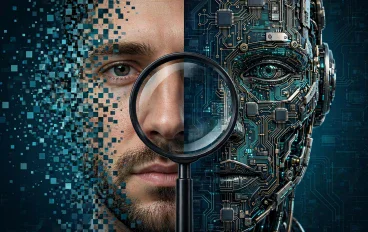
Another major challenge is the rise of synthetic media. Artificial intelligence can now generate highly realistic images, voices, and videos, making it increasingly difficult to distinguish authentic material from artificially generated content. As a result, checking sources and understanding context are becoming essential skills for anyone living in the digital age.
Privacy is another important issue. AI systems can process large amounts of information, and the way data is collected, stored, and used can have significant consequences. This is why questions about privacy, transparency, accountability, and human oversight have become central to international discussions about responsible AI.
UNESCO’s global Recommendation on the Ethics of Artificial Intelligence emphasizes principles including human dignity and rights, fairness, transparency, privacy, environmental responsibility, and human oversight. The goal is not to stop technological development, but to encourage AI systems that serve people and society responsibly. �
يونسكو
Perhaps the most important question is therefore not what artificial intelligence can do, but what we should allow it to do. A technology can be extremely powerful while still requiring clear boundaries. The way AI systems are designed, deployed, and governed will strongly influence whether their long-term impact is beneficial, harmful, or somewhere in between.
Human judgment remains important even as technology becomes more sophisticated. Understanding emotions, cultural context, social consequences, responsibility, and ethical values cannot simply be reduced to technical performance. This is why many current approaches to AI governance emphasize human-centered development and the importance of keeping people involved in important decisions.
Artificial intelligence is unlikely to disappear from everyday life. Instead, it will probably become more deeply integrated into education, workplaces, entertainment, media, culture, and ordinary digital services. The most useful response is therefore neither blind optimism nor complete rejection. It is learning how the technology works, understanding its limitations, and using it responsibly.
In the end, artificial intelligence is more than another software innovation. It represents a technological transformation that can influence how people learn, work, communicate, create, and understand information. It offers enormous opportunities, but it also introduces serious questions about privacy, employment, culture, creativity, misinformation, and human rights.
The future will not be shaped by machines alone. It will be shaped by the people who build them, use them, regulate them, and decide what role they should have in society. The most important question is therefore not whether artificial intelligence will become more intelligent, but whether we can make it more useful, responsible, and human-centered.
Important Note: This article is intended for general educational purposes and discusses the social, cultural, and technological impact of artificial intelligence. It does not predict the future with certainty, as AI technology and its applications continue to evolve rapidly.
Trusted Sources:
UNESCO – Artificial Intelligence and Emerging Technologies�
UNESCO – AI and Culture�
UNESCO – Ethics of Artificial Intelligence�
Pew Research Center – Americans and AI 2026�
Keep up with Mohamed Mohsen
Choose site notifications, email, or both. Guests can subscribe by email without an account.
Report this article
Tell our review team about a problem with this content. Your details will not be shown to the author or other readers.
Your report could not be sent. Please try again later.
Sign in to report an article




Discussion
comments (0)
Share a perspective. Start a thoughtful conversation.
please login to be able to comment