
In this article
The Broader Impact of Artificial Intelligence: Transforming Industries, Healthcare, and Human Authenticity
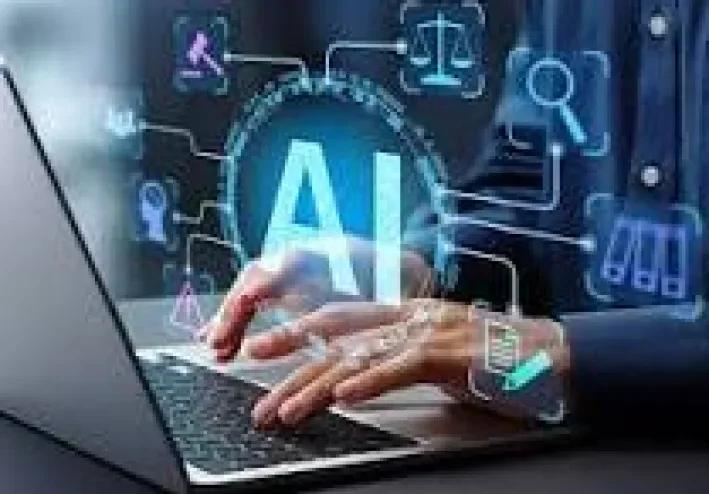
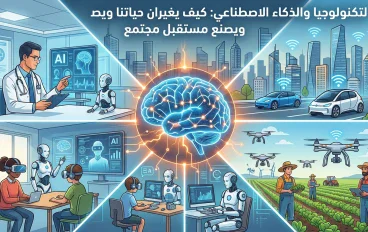
Artificial Intelligence (AI) has rapidly evolved from a niche academic pursuit into a foundational pillar of modern global infrastructure. Today, AI systems drive critical decision-making processes across diverse sectors, including healthcare diagnostics, predictive financial modeling, optimized logistics, and automated software development. By processing vast datasets at unprecedented speeds, these technologies allow organizations to solve complex challenges that were previously unmanageable. However, as AI tools become deeply integrated into everyday life, society faces a new challenge: balancing technological capability with genuine human authenticity.
The Real-World Significance of AI across Key Sectors
The transformative power of artificial intelligence spans almost every modern domain:
Economic Efficiency: Automation streamlines complex supply chains, reduces operational overhead, and optimizes resource allocation across global enterprises.
Environmental Sustainability: Smart algorithms monitor climate data, predict energy demands, and optimize power grids to minimize carbon footprints.
Despite these immense technical benefits, the proliferation of AI-generated content in communication and media has introduced a subtle cultural challenge. As automated writing and synthetic media become ubiquitous, a noticeable fatigue toward machine-generated content has emerged.
Navigating Content Authenticity in the AI Era
While AI handles analytical tasks exceptionally well, its default writing style often suffers from a sterile uniformity. Standard algorithms rely on statistical probability, leading to recognizable patterns such as over-structured transitions, perfectly symmetrical arguments, and a risk-averse, neutral tone. For written work to truly resonate in a tech-driven world, it must move beyond automated summaries and reflect a distinct, genuine human perspective.
Avoiding digital monotony requires a shift in approach. Writers and researchers must use AI as an analytical collaborator rather than a surrogate thinker. Integrating real-world observations, varying sentence rhythms, and taking clear intellectual stances ensures that human nuance remains at the forefront of discourse.
Harnessing AI for Maximum Knowledge
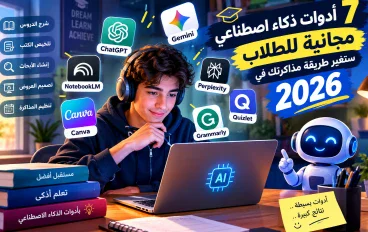
Artificial Intelligence is most powerful not as an answer generator, but as a dynamic thought partner. To gain maximum knowledge from AI, move beyond simple queries and engage in iterative dialogue. Treat the technology as a tireless tutor: ask it to explain complex concepts through analogies, test your understanding with custom quizzes, critique your arguments from opposing viewpoints, or simplify intricate research into actionable insights. By maintaining a critical mind, cross-referencing information, and asking targeted, probing questions, you transform AI from a passive source of text into an extraordinary catalyst for deeper learning and intellectual growth all over the world.
Keep up with Ahmed Alaa
Choose site notifications, email, or both. Guests can subscribe by email without an account.
Report this article
Tell our review team about a problem with this content. Your details will not be shown to the author or other readers.
Your report could not be sent. Please try again later.
Sign in to report an article



Discussion
comments (0)
Share a perspective. Start a thoughtful conversation.
please login to be able to comment