

In this article
Is Artificial Intelligence Smarter Than Humans 🤔
The Answer Yes ←→ No
In recent years, artificial intelligence has advanced at an unprecedented pace. It can now write articles, generate realistic images, write computer code, and even assist doctors and engineers in their work. This rapid progress has led many people to ask an important question:
Has artificial intelligence become smarter than humans? And will it eventually replace us
At first glance, AI certainly seems incredibly intelligent. Watching it complete tasks in seconds that would normally take people hours or even days can be both impressive and unsettling. It can analyze millions of pieces of data almost instantly and solve problems at remarkable speed, leading some people to believe that humans may no longer have a place in the future workforce.
Why Does AI Seem Smarter Than Humans
The answer is simple: speed and scale.
Artificial intelligence can process enormous amounts of information far faster than any human. It can read millions of pages, analyze thousands of images, and search massive databases in a very short time.
For example, a team of researchers might spend weeks analyzing millions of medical records, while an AI system could complete much of the same work within hours.
In software development, AI can generate thousands of lines of code and suggest solutions to complex programming problems within seconds.
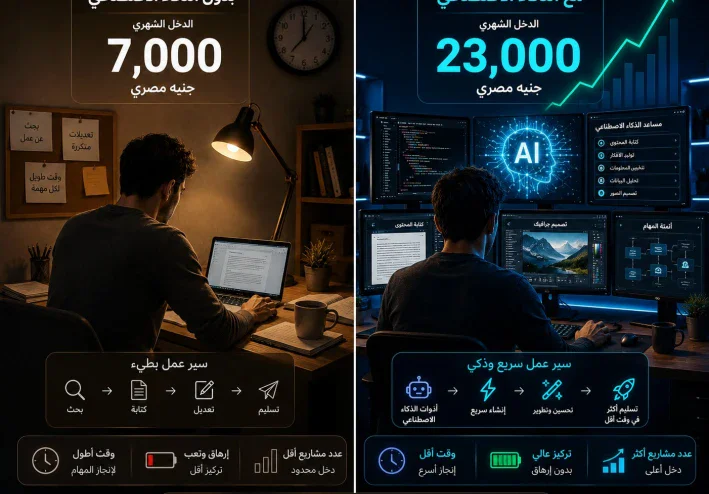
Imagine having an employee who never asks for vacation, never gets sick, never feels tired, never loses focus, and can work 24 hours a day, seven days a week.
That is one of AI's greatest strengths.
In factories, AI systems monitor production lines around the clock and detect defects immediately. In customer support, they can answer thousands of questions simultaneously, while human employees naturally need breaks.
This is also why many people worry about the future of certain jobs. Tasks such as data entry, document sorting, and other repetitive work can now be automated much more efficiently than before.
However, AI still doesn't work independently.
It doesn't understand why it performs a task—it simply follows patterns learned from data. When faced with situations requiring ethics, empathy, creativity, or human judgment, AI still depends on people.
So while AI clearly outperforms humans in repetitive tasks, it cannot truly replace great leaders, inspiring teachers, compassionate doctors, or innovative creators.
The future will belong to people who know how to use AI to multiply their productivity while focusing on what only humans can do.
The Truth Many People Don't Know
Despite its incredible capabilities, artificial intelligence is not human.
It doesn't truly understand the world the way we do. It has no emotions, consciousness, personal experiences, or genuine understanding.
Instead, AI relies entirely on patterns found in the data it has been trained on.
And here's an important limitation:
If the information it learns from is inaccurate, outdated, or biased, its answers can also be wrong.
This is one reason you shouldn't blindly trust AI when choosing products like computer components. AI often relies heavily on official specifications provided by manufacturers, which may highlight strengths while downplaying weaknesses.
As a result, it may recommend products that look impressive on paper but don't perform well in real-world use because it doesn't naturally prioritize the experiences of thousands of actual customers unless those reviews are included in the information it analyzes.
For this reason, AI should always be considered a powerful assistant—not your only source of truth.
If you'd like a detailed article about when you should—and shouldn't—rely on AI, let me know in the comments.
Things Humans Still Do Better Than AI
There are many abilities that humans perform naturally but remain extremely difficult for artificial intelligence:
Understanding genuine human emotions and showing empathy.
Making ethical decisions in complicated situations.
Creating original ideas based on personal experiences.
Building authentic human relationships.
These uniquely human qualities continue to set us apart.

How Can You Benefit from Artificial Intelligence
Artificial intelligence is no longer a technology reserved for programmers or large corporations. Today, anyone with a smartphone or computer can use it
AI has become part of education, healthcare, programming, graphic design marketing business, and content creation.
The real question is no longer
"Will AI replace humans
Instead, ask yourself
"How can I use AI to become more productive?"
Think of AI as your personal assistant rather than a machine that simply answers questions.
It can summarize books, explain difficult topics, generate project ideas draft articles, translate languages, and help you learn new skills—saving countless hours of work
Students can use AI to simplify difficult lessons, create study plans, summarize textbooks, and ask unlimited questions. However, copying answers without understanding them will never replace real learning.
Programmers can use AI to explain code, debug software, and suggest solutions—but great developers still understand their code instead of blindly copying it.
Graphic designers can generate concepts for logos, advertisements, and creative visuals within minutes. Yet creativity, artistic judgment, and understanding a client's vision still belong to the designer.
Small business owners can write product descriptions, respond to customers, analyze feedback, create marketing strategies, and produce social media content much faster than ever before.
One of the biggest mistakes people make is asking AI to complete an entire task and publishing the result without editing it.
The smarter approach is to use AI as a starting point, then add your own expertise, verify the facts, improve the writing, and include your personal perspective.
That is how AI becomes a tool that increases your value instead of replacing you.
It's also important to understand AI's limitations.
AI can misunderstand questions, make mistakes, or provide outdated information. That's why you should never rely solely on AI for important medical, legal, or financial decisions without consulting trusted sources or qualified professionals.
The future will not belong to people who reject AI, nor to those who depend on it completely
It will belong to those who combine the speed of machines with the intelligence, creativity, ethics, and imagination of humans.
If you start learning AI tools today, you'll save time, improve your skills, and become more competitive in the job market.
Ignore this technology, and you may eventually find yourself working the old way while others accomplish the same work in half the time
The best investment you can make today isn't buying another tool it's learning how to use artificial intelligence wisely
AI won't succeed for you, but it can help you achieve far more than you ever thought possible




Discussion
comments (0)
Share a perspective. Start a thoughtful conversation.
please login to be able to comment