

In this article
Artificial Intelligence and Religions
Throughout history, humans have searched for an invention capable of imitating the human mind and its way of thinking. Artists, writers, filmmakers, and game developers alike have all tried to find a logical explanation for the concept of artificial intelligence. For example, in 1872, Samuel Butler spoke in his novel Erewhon about machines and the major role they would play in developing humanity and leading the world toward progress and prosperity
Over time, artificial intelligence existed only in science fiction. Sometimes it highlighted the potential benefits of AI for humanity and its positive human aspects, while at other times it focused on its expected negative sides, portraying it as a fierce enemy of humanity seeking to dominate civilization and take control of it
In recent decades, artificial intelligence has become one of the most prominent signs of technological progress, entering various fields such as medicine, education, and industry. With this rapid development, it has begun to raise profound questions about its relationship with religions and its impact on human spiritual and moral values
From a religious perspective, artificial intelligence is viewed as a product of the human intellect that God has granted to mankind. Many religions, such as Islam and Christianity, emphasize the importance of knowledge and learning, and regard scientific discoveries as a way to gain a deeper understanding of the universe. Therefore, artificial intelligence can be considered an extension of humanity’s creative ability rather than a rival to the Creator
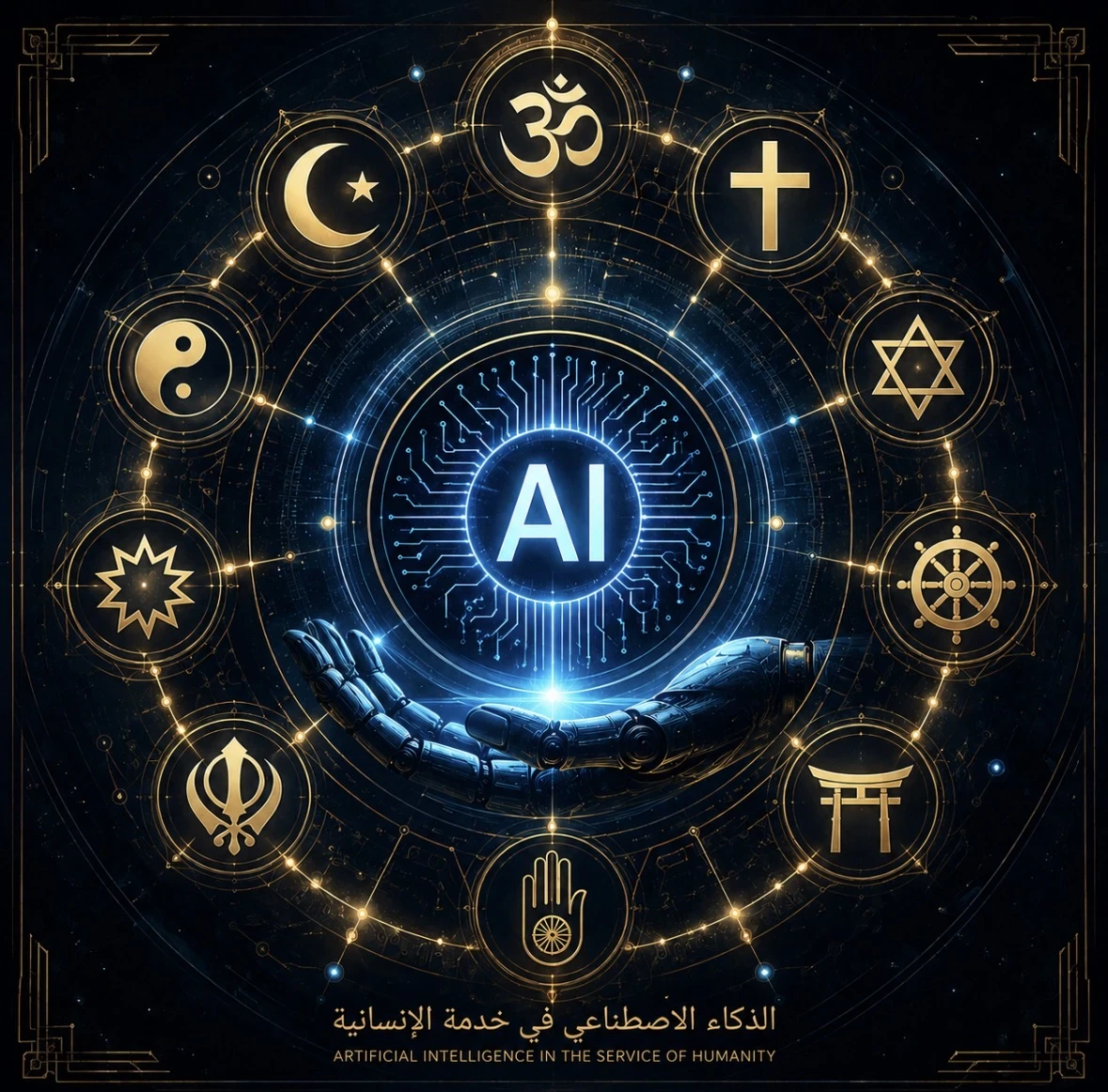
However, artificial intelligence raises complex ethical issues. For example, who is responsible for the decisions made by intelligent machines? And can they replace humans in making sensitive decisions such as in law or medicine? These questions intersect with religious values that emphasize individual responsibility, justice, and human dignity.
Artificial intelligence, like any technological tool, does not inherently possess a fixed spiritual impact; rather, its influence depends on how humans choose to use it. This is why there is an ongoing debate between those who see it as a threat to spirituality and those who view it as a beneficial means of serving religion and knowledge
On one hand, some fear that excessive use of technology may reduce opportunities for inner reflection and spiritual peace. Constant engagement with screens and notifications can weaken a person’s mental presence during worship, making individuals more attached to speed and digital consumption, and less inclined toward solitude and contemplation. Moreover, excessive reliance on artificial intelligence for answers and guidance may make some people less motivated to seek knowledge or engage in personal reflection
On the other hand, many believe that technology can be a positive tool if used wisely. Artificial intelligence facilitates access to religious books, learning languages associated with sacred texts, and listening to lessons and lectures from anywhere in the world. It can also help spread religious knowledge, correct misconceptions, and even assist people with disabilities through tools that make reading or listening easier
Therefore, the issue does not lie in the existence of artificial intelligence itself, but rather in how it is used. If it becomes a substitute for contemplation and direct spiritual connection, it may weaken a person’s faith and spirituality. However, if it is used as a tool that supports learning, organization, and access to beneficial knowledge, it can strengthen religious awareness instead of diminishing it
In the end, the relationship between artificial intelligence and religions is not one of conflict, but rather a field for dialogue and integration. Technology itself is neither inherently good nor evil; its value depends on how it is used. For this reason, there remains an urgent need to establish an ethical framework that ensures artificial intelligence is directed toward serving humanity while preserving human dignity and spiritual values
Keep up with abderrahim ben said
Choose site notifications, email, or both. Guests can subscribe by email without an account.
Report this article
Tell our review team about a problem with this content. Your details will not be shown to the author or other readers.
Your report could not be sent. Please try again later.
Sign in to report an article










Discussion
comments (0)
Share a perspective. Start a thoughtful conversation.
please login to be able to comment