
في هذا المقال
AI: The Brilliant, Messy, and Slightly Scary Reality of Our Future
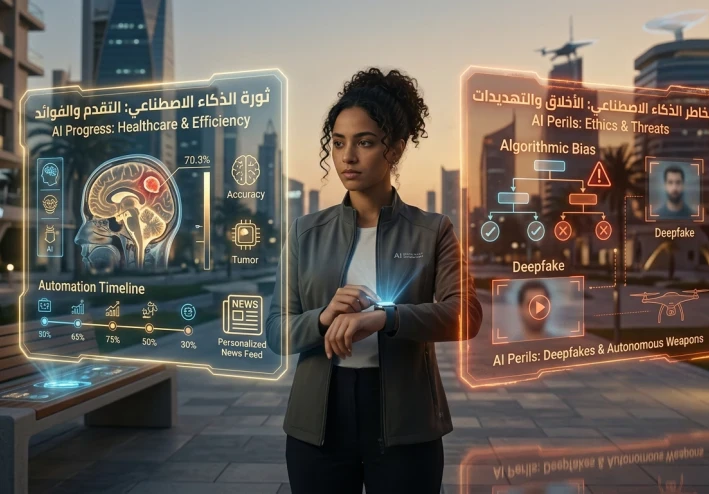
Let’s be honest: you can’t scroll through your phone for five minutes without hitting something about Artificial Intelligence. It’s everywhere. It’s the brain behind your Spotify playlists and the reason your bank can spot a weird transaction before you even notice it. But as AI moves from a "cool tech trend" to the literal backbone of our world, we need to have a serious talk. Is this stuff actually helping us, or are we opening a door we won’t be able to close?
The Good Stuff: Why We’re Hooked
It’s not hard to see why everyone is obsessed with AI. From a purely practical standpoint, it’s a powerhouse. Think about the sheer amount of data we produce every second—no human can make sense of that, but AI can.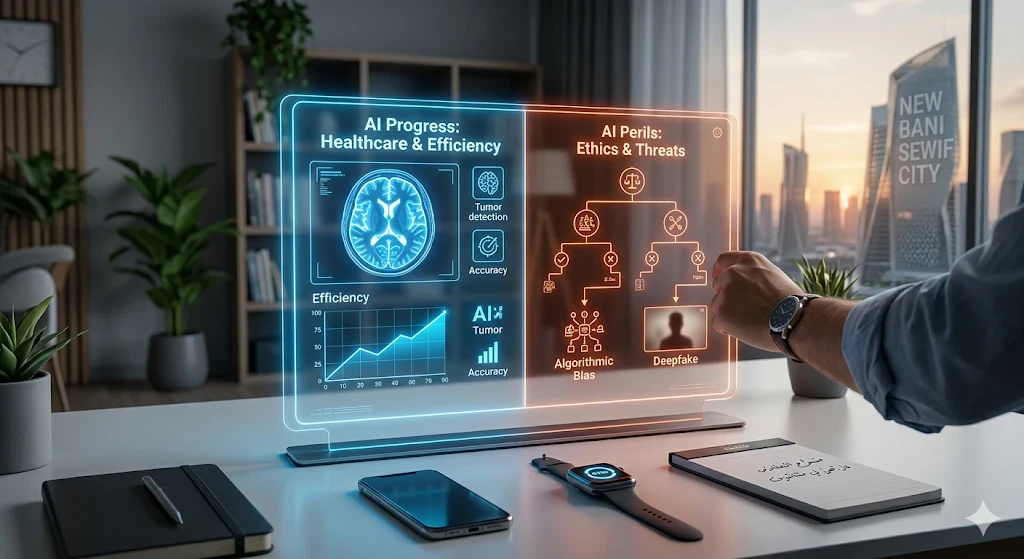
In hospitals, this isn't just about tech; it’s about saving lives. We’re seeing AI systems catch early signs of cancer on scans that even the most experienced doctors might blink and miss. That’s massive. Then you’ve got the convenience factor. AI doesn’t get tired, it doesn’t need coffee breaks, and it doesn't get bored of doing the same repetitive task ten thousand times. Whether it’s streamlining a factory line or organizing a messy database, it just gets the job done with zero complaints.
The Reality Check: It’s Not All Perfect
But here’s where things get a bit complicated. We’ve all seen the headlines about AI "stealing" jobs. And while it’s true that automation is efficient, it’s also leaving a lot of people wondering where they fit in a world that’s being run by algorithms.
There’s also the "Human Element." A machine can follow a script, but it can’t feel empathy. It doesn’t understand the nuance of a conversation or the gut feeling a teacher has when a student is struggling. Plus, there’s the "Black Box" issue—sometimes, these systems make a decision, and even the people who built them can’t explain exactly why. That’s a pretty uncomfortable thought when you realize AI is starting to influence things like court cases and bank loans.
The Darker Side: When Tech Loses Its Way
What really keeps tech experts up at night, though, isn’t just a robot taking a desk job—it’s the unethical side of the coin. Since AI learns from us, it also learns our worst habits. We’ve seen AI hiring tools that are biased against certain groups of people because they were trained on flawed, historical data.
Then you have Deepfakes. It’s becoming terrifyingly easy to create a video of someone saying or doing something they never did. In a world where "seeing is believing," that’s a direct hit to the truth. And don't even get me started on autonomous weapons—drones that can make their own decisions about who to target. That’s not a video game; that’s a genuine global risk.
The Bottom Line
At the end of the day, AI is just a tool. It’s the most powerful tool we’ve ever built, but it’s still just a tool. Whether it ends up being our greatest achievement or our biggest mistake depends entirely on us. We need to stop just asking "what can it do?" and start asking "what should it be allowed to do?" Innovation is great, but without a moral compass, we’re just driving fast into the dark.
تابع جديد Abdallah
اختر إشعارات الموقع أو البريد أو الاثنين. الزائر يقدر يشترك ببريده دون تسجيل حساب.
الإبلاغ عن المقال
لو لاحظت مشكلة في المحتوى، أرسلها لفريق المراجعة. لن تظهر بياناتك لكاتب المقال أو للقراء.
تعذّر إرسال البلاغ الآن. حاول مرة أخرى لاحقًا.
سجّل الدخول لإرسال بلاغ





النقاش
التعليقات (0)
فكرة تضيفها، أو سؤال يفتح حوارًا.
الرجاء تسجيل الدخول لتتمكن من التعليق