



In this article
How Was Artificial Intelligence Created? The Secrets Behind AI Programming, Neural Networks, and Machine Learning
Introduction
Have you ever wondered how artificial intelligence can understand your questions, write articles, translate languages, solve mathematical problems, and even generate images and videos? How did humans transform ordinary computers, which only understand numbers and instructions, into intelligent systems capable of communicating with people?
The truth is that artificial intelligence was not created using a single programming language or one computer program. Instead, it is the result of decades of scientific research and technological development involving mathematics, computer science, statistics, and programming.
In this article, we will explore how artificial intelligence was developed, the scientific ideas behind it, the programming languages used to build it, how machines learn from enormous amounts of information, and how modern AI systems understand and respond to human instructions.
1. What Is the Basic Idea Behind Artificial Intelligence?
In traditional programming, computers follow specific instructions written by programmers.
For example, if a programmer wants to create a program that calculates students' grades, they write instructions telling the computer to add the grades, divide the total by the number of subjects, and display the final result.
However, traditional programming becomes extremely complicated when computers need to perform more advanced tasks, such as recognizing faces, understanding human speech, or identifying objects in photographs.
Imagine trying to write instructions that describe every possible human face or every way someone might express the same idea using different words. This would be almost impossible.
Scientists began exploring a different approach called Machine Learning.
Instead of programming every possible answer manually, developers created systems that could learn patterns from large amounts of data.
In simple terms, programmers no longer needed to tell computers exactly how to solve every problem. They could provide examples and allow mathematical algorithms to discover patterns and improve their performance through training.
This idea became one of the most important foundations of modern artificial intelligence.
2. How Does Artificial Intelligence Learn From Information?
Modern artificial intelligence systems rely heavily on machine learning, particularly a field known as Deep Learning.
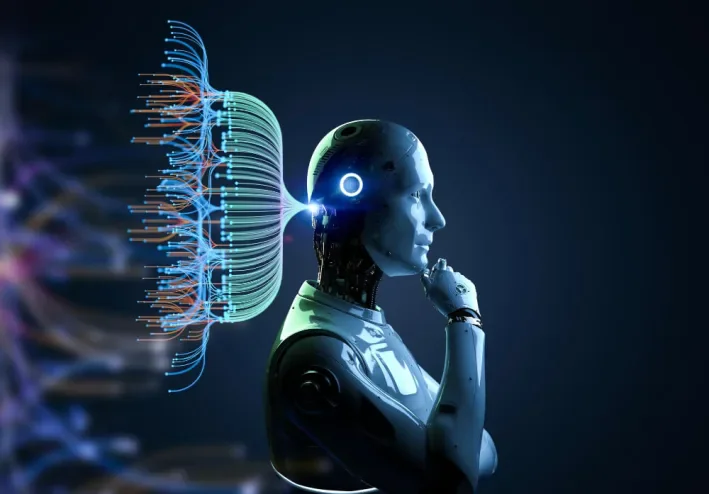
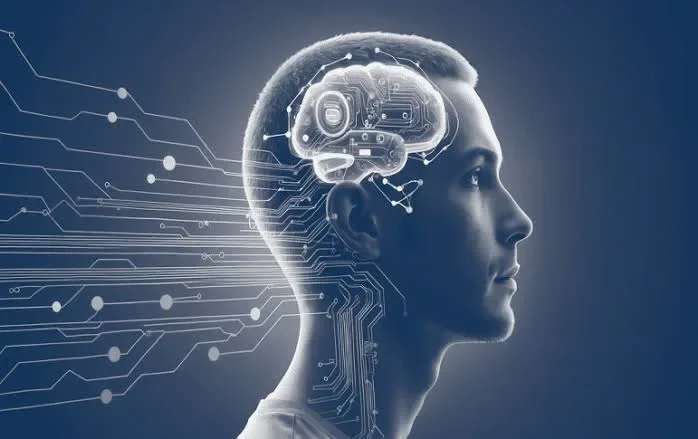
Deep learning uses artificial neural networks, which are mathematical and computational systems loosely inspired by the way biological neurons connect and communicate in the human brain.
An artificial neural network usually consists of several layers containing computational units called neurons or nodes.
These networks generally operate through three main types of layers:
1. Input Layer
This layer receives the information that the system needs to analyze. The information could include text, images, numbers, or audio recordings.
2. Hidden Layers
These layers process the information and identify patterns and relationships through mathematical calculations.
3. Output Layer
This layer produces the final result, such as identifying an object in an image, predicting a value, or generating a response to a question.
To understand this better, imagine training an artificial intelligence system to distinguish between cats and dogs.
Developers provide thousands of pictures and label each image correctly. Initially, the system may make many mistakes. However, during training, it gradually adjusts its internal mathematical parameters to improve its ability to recognize the differences between cats and dogs.
This process is called Model Training.
3. What Are Algorithms and Mathematical Weights?
One of the most important elements of artificial intelligence is the use of algorithms.
An algorithm is a series of mathematical or logical steps that determines how a computer processes information and solves a particular problem.
Another important concept is called Weights.
Weights are numerical values that determine how strongly different connections influence the calculations inside a neural network.
During training, the system tries to produce accurate results. Whenever it makes a mistake, the difference between its prediction and the expected answer can be measured using something called a Loss Function.
After calculating the error, the system uses mathematical techniques such as:
- Gradient Descent.
- Backpropagation.
- Optimization Algorithms.
These techniques help adjust the network's weights to reduce errors over time.
The interesting part is that programmers do not need to manually determine every weight. Instead, the system automatically adjusts these values through mathematical calculations during training.
By repeating this process many times using large datasets, the model gradually becomes better at recognizing patterns and producing useful results.
4. How Were ChatGPT and Modern Conversational AI Systems Created?
One of the most important developments in artificial intelligence was the emergence of Large Language Models (LLMs).
These models are designed to process human language, understand relationships between words, and generate meaningful text.
Many modern language models use a powerful architecture called the Transformer.
This architecture became widely known after a famous scientific research paper published in 2017 titled Attention Is All You Need.
One of the most important innovations introduced by Transformers was a mechanism called Self-Attention.
Self-attention allows a model to examine different words within a sentence and calculate how strongly they are related to one another.
For example, consider this sentence:
"John went to the bank to deposit his money."
The model uses the surrounding words to understand that the word "bank" refers to a financial institution rather than the side of a river.
Transformer models contain multiple layers of mathematical operations that convert words into numerical representations and analyze their relationships.
ChatGPT, for example, is not simply a database containing ready-made answers. It is based on a language model trained to recognize patterns in text and generate new responses based on what it has learned.
5. What Role Does Data Play in Creating Artificial Intelligence?
Artificial intelligence cannot become useful without suitable training data.
Data is the fundamental material that helps AI models learn. It can include:
- Written articles and books.
- Photographs and illustrations.
- Audio recordings.
- Videos.
- Numerical information.
- Other digital content.
In language models, text is processed and divided into smaller units called Tokens.
A token can represent an entire word, part of a word, or a punctuation mark.
These tokens are converted into numerical representations that computers can process.
During training, the model learns relationships between these numerical representations.
One of the main training objectives of many language models is predicting the next token based on the previous context.
For example, if you write:
"Cairo is the capital of..."
The model calculates which words are most likely to follow the sentence. It may predict the word "Egypt."
However, the process does not stop at predicting one word. The model repeats this operation many times until it generates a complete response.
This is one of the fundamental mechanisms behind modern text-generation systems.
6. Which Programming Languages Are Used to Build Artificial Intelligence?
Many people ask an interesting question: Is artificial intelligence created using only one programming language?
The answer is no.
Developing modern AI systems requires several programming languages and technologies, each serving a different purpose.
1. Python
Python is one of the most popular programming languages in artificial intelligence and machine learning.
Its popularity comes from its relatively simple syntax and the availability of powerful libraries that help developers build and train machine learning models.
Some important Python libraries include:
- TensorFlow: A framework used to build and train machine learning and deep learning models.
- PyTorch: A powerful library widely used for developing neural networks and performing mathematical operations.
- NumPy: A library designed for numerical calculations and working with arrays and matrices.
- Scikit-learn: A library that provides tools for traditional machine learning algorithms.
2. C++
C++ is used in performance-critical parts of artificial intelligence systems.
It is particularly useful when developers need fast execution, efficient memory management, and high-performance mathematical calculations.
3. CUDA
CUDA is a technology developed by NVIDIA that allows programmers to use NVIDIA graphics processing units (GPUs) for parallel computing.
This is especially important because training large AI models requires enormous numbers of mathematical operations.
4. Java and JavaScript
Java can be used to develop applications and backend services that communicate with artificial intelligence models.
JavaScript is commonly used to create websites and interactive applications that allow users to access AI-powered services through their browsers.
Therefore, there is no single programming language called the language of artificial intelligence. Instead, different programming languages and technologies work together to build and operate intelligent systems.
7. How Does Artificial Intelligence Understand Human Instructions?
Some people believe that artificial intelligence understands instructions in exactly the same way a computer understands traditional programming commands.
However, there is an important difference.
In traditional programming, developers write specific instructions using programming languages such as Python to perform particular operations.
When someone uses ChatGPT, however, they can simply write a request in natural language.
For example:
"Write an article about the history of computers."
This request is called a Prompt.
The AI system processes the text, converts it into numerical representations, and passes the information through the language model.
The model then uses patterns learned during training to generate an appropriate response.
Modern AI systems may also operate under additional instructions that determine how they should behave, what limitations they must follow, and how they should respond to different requests.
It is useful to distinguish between three important elements:
- Programming Code: Determines how the software and its components operate.
- Training Data: Helps the model learn patterns and relationships.
- Prompts: Guide the model during actual use and describe the task requested by the user.
This explains why writing clear and detailed prompts can improve the quality of AI-generated responses.
8. How Is Artificial Intelligence Trained to Become More Accurate?
Large language models usually go through several training stages.
Some of the most important stages include:
Stage One: Pretraining
During pretraining, the model learns from enormous amounts of text.
It discovers language patterns, relationships between words, and statistical structures that help it predict and generate text.
Stage Two: Fine-Tuning
The model receives additional training using more specialized datasets.
This helps improve its performance on particular tasks, such as answering questions, following instructions, and producing more relevant responses.
Stage Three: Improving Model Behavior
Developers can use human evaluations and additional training techniques to improve the quality and usefulness of the model's responses.
One well-known technique is called Reinforcement Learning from Human Feedback (RLHF).
In this approach, human feedback helps guide the model toward responses that are more helpful and appropriate.
Through these different stages, language models become more capable of following instructions and handling a wide range of tasks.
9. Does Artificial Intelligence Really Think Like a Human?
Despite the impressive progress of artificial intelligence, modern AI systems do not necessarily think or feel the way humans do.
Their abilities are based on mathematical models, algorithms, statistical patterns, and complex computational processes.
They can generate responses that appear intelligent and participate in realistic conversations, but this does not mean they possess human consciousness, emotions, or personal experiences.
Artificial intelligence systems can also make mistakes and sometimes produce incorrect information.
For this reason, users should verify important information, especially when dealing with medical, legal, or financial topics.
Understanding the difference between artificial intelligence and human intelligence is essential when using these technologies responsibly.
10. Can Anyone Learn How to Build Artificial Intelligence?
Yes! Anyone interested in programming can begin learning the fundamentals of artificial intelligence.
However, developing advanced AI systems requires patience, practice, and a gradual learning process.
A good learning path for beginners includes:
- Learn programming fundamentals using Python.
- Study basic mathematics, statistics, and linear algebra.
- Understand machine learning algorithms.
- Learn how artificial neural networks work.
- Practice using TensorFlow and PyTorch.
- Build small projects, such as an image recognition system or a program that predicts house prices.
After gaining experience, learners can move toward more advanced projects and explore the technologies behind modern language models.
The most important thing is to combine theoretical knowledge with practical programming experience.
Conclusion
Artificial intelligence is not magic, nor is it simply a collection of programming commands. It is a major scientific and technological achievement that combines mathematics, data, algorithms, neural networks, and modern programming languages.
The most important idea behind its development was the transition from programming computers to know every answer in advance to building systems that can learn from data, discover patterns, and improve their performance through training.
As research continues, artificial intelligence is expected to play an increasingly important role in education, medicine, manufacturing, software development, and many other industries.
Perhaps the most important question today is not simply what artificial intelligence can do, but how humans can learn this technology and use it to create a better future.
References and Further Reading
- Google for Developers – Machine Learning Crash Course
- Google Research – Attention Is All You Need
- PyTorch – Official Documentation
- Google for Developers – Neural Networks and Backpropagation
Keep up with Ezz Omar
Choose site notifications, email, or both. Guests can subscribe by email without an account.
Report this article
Tell our review team about a problem with this content. Your details will not be shown to the author or other readers.
Your report could not be sent. Please try again later.
Sign in to report an article







Discussion
comments (0)
Share a perspective. Start a thoughtful conversation.
please login to be able to comment