
In this article
1. What Is Business Automation?
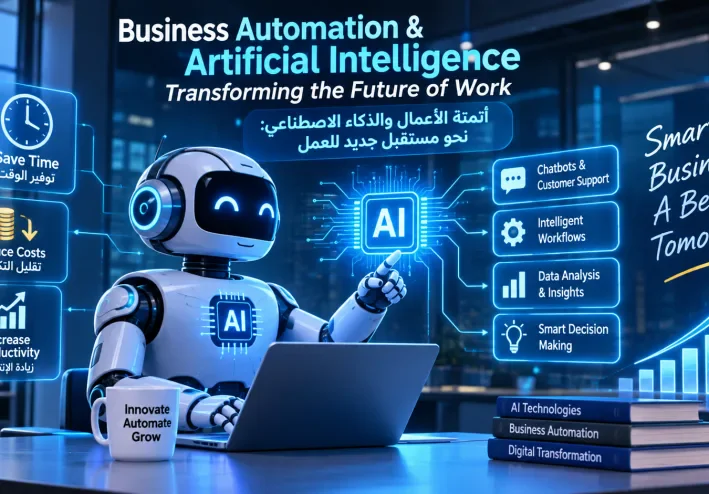
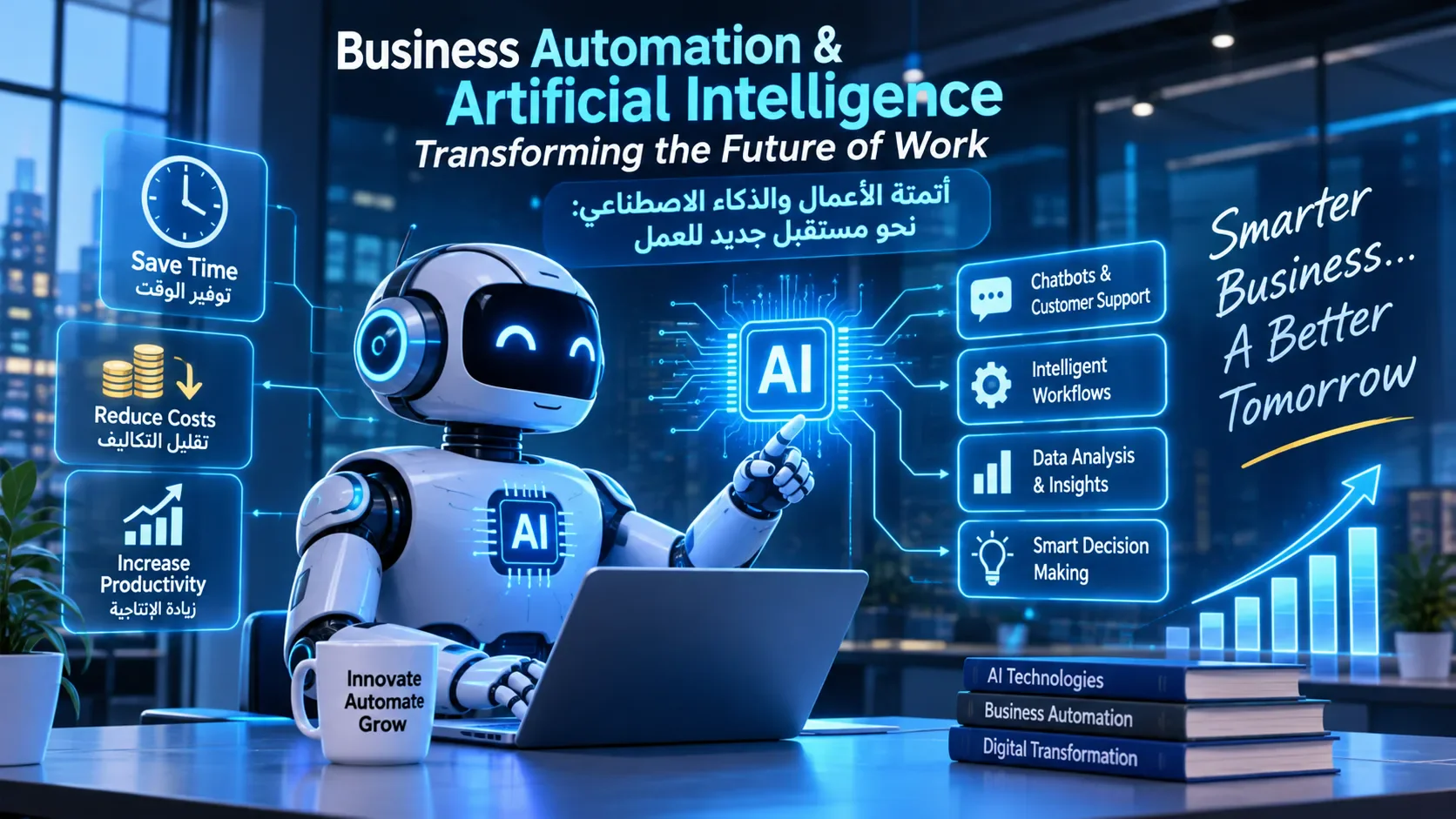
Business Automation is the use of technology and software to perform repetitive tasks and business processes automatically with minimal human intervention. Its main goal is to improve efficiency, reduce manual work, save time, and increase overall productivity.
For example, instead of having employees manually respond to hundreds of customer messages, a company can use automated systems to answer common questions, manage orders, send notifications, and update databases automatically.
Tools such as n8n allow businesses to connect different applications and services, creating automated workflows without requiring extensive programming. This helps organizations simplify daily operations and focus on more valuable activities.
2. The Role of Artificial Intelligence in Business Automation
Artificial Intelligence has taken business automation to a new level. Traditional automation mainly follows predefined rules and instructions, while AI-powered systems can analyze information, understand human language, recognize patterns, and support decision-making.
Some of the most important technologies include:
Machine Learning (ML): Allows systems to learn from data and improve their performance over time.
Natural Language Processing (NLP): Enables computers to understand, process, and respond to human language.
Large Language Models (LLMs): Advanced models that can understand text, generate content, summarize information, and assist with complex tasks.
AI Agents: Intelligent systems that can understand goals, use external tools and APIs, and perform multiple tasks to achieve specific objectives.
Generative AI: Technology that can create new content, including text, images, audio, and code.
By combining these technologies with automation platforms, businesses can develop intelligent systems that handle more complex workflows and provide better operational results.
3. Key Benefits of AI and Business Automation
Implementing AI and automation offers several advantages that help businesses improve their performance and remain competitive.
1. Increased Productivity
Automation allows employees to complete more tasks in less time by handling repetitive activities automatically. This gives employees more opportunities to focus on creative, strategic, and high-value work.
2. Reduced Operational Costs
Automated systems can reduce the resources required to manage daily operations. Businesses can save money by minimizing manual tasks, improving resource allocation, and reducing unnecessary processes.
3. Better Customer Experience
AI-powered chatbots and virtual assistants can provide customer support around the clock. They can answer frequently asked questions, assist customers with their requests, and provide faster responses.
4. Improved Accuracy
Automation reduces human errors in tasks such as data entry, document processing, and information management. This improves the consistency and reliability of business operations.
5. Smarter Decision-Making
AI systems can analyze large amounts of data and extract valuable insights. These insights help managers understand business performance, identify trends, and make more informed decisions.
4. Real-World Applications of AI Automation
AI automation is already being used across different industries to improve business operations and solve everyday problems.
E-commerce: Businesses can use AI agents to receive customer orders, check product availability, update databases, track deliveries, and answer customer questions automatically.
Healthcare: Automation systems can help manage appointments, send reminders, organize administrative records, and reduce repetitive paperwork.
Human Resources (HR): AI can assist with CV screening, candidate classification, interview scheduling, and recruitment processes, helping HR teams manage applications more efficiently.
Customer Service: Intelligent chatbots can understand customer requests, provide relevant answers, and transfer complex cases to human employees when necessary.
These examples demonstrate that AI automation is not limited to one industry. Almost any business can benefit from automating repetitive processes and using intelligent systems to improve its services.
5. Challenges of Implementing AI Automation
Despite its advantages, implementing AI and business automation comes with several challenges.
One major challenge is the initial cost of developing and maintaining automated systems. Businesses may also need employees with specialized technical skills to build, manage, and monitor these solutions.
Another important concern is data privacy and security. Companies must protect customer information and ensure that their systems follow appropriate security practices.
AI systems can also generate inaccurate results or make incorrect decisions. Therefore, human supervision remains important, especially when dealing with sensitive information or critical business operations.
Successful AI implementation requires proper planning, employee training, continuous monitoring, and a clear understanding of business needs.
6. The Future of AI and Business Automation
The future of business automation is closely connected to the continuous development of Artificial Intelligence. Technologies such as Agentic AI, Multi-Agent Systems, Retrieval-Augmented Generation (RAG), and Generative AI are creating new opportunities for businesses.
In the coming years, AI agents will become more capable of managing complete workflows, interacting with different applications, using APIs, analyzing information, and performing multiple actions based on specific business objectives.
For example, an intelligent business system could manage customer requests, update internal databases, generate reports, and notify employees when human intervention is required.
This transformation does not necessarily mean that human employees will become unnecessary. Instead, the nature of work will evolve, making skills such as critical thinking, problem-solving, communication, and AI engineering increasingly valuable.
Companies that understand how to combine human expertise with intelligent automation will have a stronger competitive advantage.
Conclusion
Artificial Intelligence and Business Automation are no longer just emerging technologies; they are becoming essential parts of modern business strategies.
By automating repetitive tasks, improving decision-making, reducing operational costs, and enhancing customer experiences, businesses can achieve better results and operate more efficiently.
The future will not simply be about automating individual tasks. It will be about building intelligent systems that can understand goals, analyze information, use different tools, and manage complete business workflows with minimal human intervention.
Ultimately, the most successful businesses will be those that use AI not to replace human potential, but to enhance it.
Keep up with Yousef Abdelsalam
Choose site notifications, email, or both. Guests can subscribe by email without an account.
Report this article
Tell our review team about a problem with this content. Your details will not be shown to the author or other readers.
Your report could not be sent. Please try again later.
Sign in to report an article





Discussion
comments (0)
Share a perspective. Start a thoughtful conversation.
please login to be able to comment