How Artificial Intelligence Is Changing Our Lives in 2026: The Technological Revolution You Can't Ignore
How Artificial Intelligence Is Changing Our Lives in 2026: The Technological Revolution You Can't Ignore
Artificial Intelligence (AI) has evolved from a futuristic concept into one of the most influential technologies of the modern world. Today, AI is integrated into our smartphones, workplaces, schools, hospitals, and even our daily routines. Whether you're asking a virtual assistant a question, receiving personalized recommendations on streaming platforms, or using an AI-powered writing tool, you're already experiencing the impact of artificial intelligence.
In 2026, AI is no longer just a competitive advantage—it has become an essential part of innovation across almost every industry. Companies are investing billions of dollars in AI technologies to improve efficiency, reduce costs, and deliver better services. As a result, professionals who understand how to work alongside AI are becoming increasingly valuable in today's digital economy.
Why Artificial Intelligence Matters More Than Ever
The biggest strength of AI lies in its ability to analyze enormous amounts of data within seconds. Instead of replacing human intelligence, AI enhances it by helping people make faster and more informed decisions.
Businesses use AI to predict customer behavior, healthcare professionals rely on it to assist with medical diagnosis, educators personalize learning experiences using AI-powered platforms, and software developers accelerate programming with intelligent coding assistants.
As AI technology continues to improve, its applications are expanding rapidly into industries that once relied entirely on human expertise.
How AI Is Transforming Everyday Life
Most people interact with artificial intelligence multiple times every day without even realizing it.
Search engines provide smarter results based on user intent. Navigation apps calculate the fastest routes by analyzing live traffic conditions. Online shopping platforms recommend products based on browsing history, while streaming services suggest movies and music tailored to individual preferences.
AI also powers voice assistants, language translation tools, facial recognition systems, spam detection, smart home devices, and advanced photo editing applications.
These technologies have become so deeply integrated into modern life that many users don't even recognize they are powered by artificial intelligence.
Artificial Intelligence in Education
Education has experienced one of the biggest transformations thanks to AI.
Students now have access to intelligent tutoring systems that explain complex concepts, generate personalized study plans, summarize lengthy documents, and provide instant feedback on assignments.
Teachers also benefit from AI by automating administrative tasks, creating lesson materials more efficiently, and monitoring student progress through detailed performance analytics.
Rather than replacing teachers, AI allows educators to spend more time focusing on creativity, communication, and student engagement.
AI and the Future of Work
One of the most frequently asked questions is whether AI will replace human jobs.
The reality is more balanced than many headlines suggest.
While repetitive and routine tasks are increasingly being automated, AI is simultaneously creating entirely new career opportunities.
Some of the fastest-growing AI-related professions include:
- AI Prompt Engineer
- Machine Learning Engineer
- Data Scientist
- AI Product Manager
- Automation Specialist
- AI Ethics Consultant
- Robotics Engineer
- AI Research Analyst
Professionals who learn how to collaborate with AI tools will have a significant competitive advantage in the global job market.
The Most Popular AI Tools in 2026
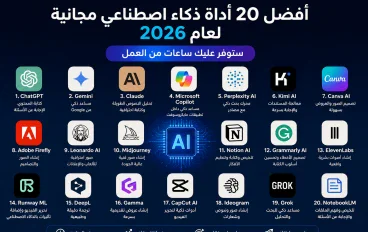
Artificial Intelligence software has become more accessible than ever before. Some of the most widely used tools include:
- ChatGPT for writing, brainstorming, research, and productivity.
- Google Gemini for intelligent search and workplace assistance.
- Claude for document analysis and professional writing.
- GitHub Copilot for software development and coding support.
- Midjourney for AI-generated artwork.
- Adobe Firefly for creative design and image generation.
- Canva AI for presentations, social media graphics, and visual content.
These platforms help individuals and businesses save time while increasing creativity and productivity.
AI and Content Creation
Content creation has entered a new era because of artificial intelligence.
Writers can generate article outlines, marketers can analyze audience behavior, designers can create professional visuals within minutes, and video creators can automate editing processes using AI-powered software.
However, originality remains essential.
AI can assist with research and production, but human creativity, storytelling, and authenticity continue to be the qualities that attract loyal audiences and build long-term trust.
Challenges and Ethical Considerations
Despite its remarkable benefits, artificial intelligence also presents important challenges.
Privacy concerns, misinformation, algorithmic bias, cybersecurity risks, and responsible AI development have become major topics of discussion among governments, technology companies, and researchers.
Developing ethical guidelines and transparent AI systems will play a crucial role in ensuring that these technologies continue to benefit society without compromising security or fairness.
How to Start Learning Artificial Intelligence
If you're interested in building a career around AI, the best approach is to start with practical learning.
Begin by understanding the fundamentals of artificial intelligence and machine learning. Experiment with popular AI tools, complete small projects, and continuously improve your digital skills.
Focus on solving real-world problems rather than simply learning theory. Building a portfolio that demonstrates your ability to use AI effectively will significantly increase your career opportunities.
Remember that consistency is far more valuable than trying to master every AI tool at once.
The Future of Artificial Intelligence
Experts predict that AI will become even more integrated into daily life over the next decade.
Healthcare systems will become more accurate through AI-assisted diagnosis, transportation will benefit from autonomous technologies, businesses will automate increasingly complex operations, and personalized education will continue to evolve.
Rather than replacing humanity, artificial intelligence is expected to become one of the most powerful tools for enhancing human capabilities and accelerating innovation.
Those who embrace lifelong learning and adapt to technological change will be best positioned to succeed in the rapidly evolving digital economy.
Final Thoughts
Artificial Intelligence is no longer a technology of the future—it is shaping the present. From education and healthcare to business and entertainment, AI is transforming how people work, communicate, and solve problems.
The individuals who invest time in understanding and applying AI today will be better prepared for tomorrow's opportunities. Instead of fearing technological change, embracing AI responsibly can open the door to greater productivity, creativity, and long-term career success.