

في هذا المقال
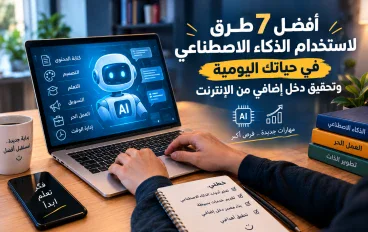
Artificial Intelligence in Our Daily Lives How to Use It Smartly Without Fully Relying on It Introduction
In recent years, Artificial Intelligence (AI) has ceased to be a concept confined to movies or tech labs; it has become an integral part of our daily lives When your phone suggests the next word while typing, a maps app helps you choose the fastest route, or a streaming platform recommends a movie that matches your taste, you are interacting with AI without even realizing it
Today, these technologies are evolving rapidly and have become accessible to almost everyone—whether they are students, employees, business owners, or simply individuals looking to organize their daily routines The importance of AI lies in its ability to save time, reduce repetitive tasks, provide quick access to information, and offer ideas and suggestions that might be difficult to reach using traditional methods
However, truly benefiting from these technologies does not mean using them for everything; rather, it means knowing when and how to use them as supporting tools that assist humans without replacing their thinking or creativity
Free AI Tools That Save Time
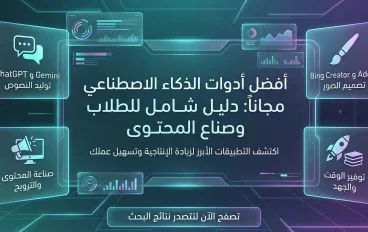
Dozens of free tools are available today to help with writing, translation, design, research, and brainstorming Below is a list of some of the most popular tools that anyone can start using right away
| Tool | Function | Platform | Free Version Limitations | When to Use It? |
|---|---|---|---|---|
| ChatGPT | Content writing, summarizing text, answering questions | Web, Android, iOS | Some advanced features are paid | For research, learning, or drafting |
| Google Gemini | Assisting in research, writing, and data analysis | Web, Mobile | Usage limits on certain features | For research and connecting information |
| Microsoft Copilot | Writing, summarizing files, workplace assistance | Web, Windows | Certain capabilities require a Microsoft subscription | For work and productivity |
| Canva AI | Designing images, presentations, and posts | Web, Mobile | Some templates and tools are paid | For quick and easy designing |
| Grammarly | Correcting grammar errors and improving English writing | Web, Browser extension | Advanced suggestions are paid | To improve writing quality |
| Perplexity AI | Searching for information while displaying sources | Web, Mobile | Limited number of pro features | For academic research or data gathering |
Tool Links
ChatGPT https//chatgptcom
Google Gemini https//geminigooglecom
Microsoft Copilot https//copilotmicrosoftcom
Canva https//wwwcanvacom
Grammarly https//wwwgrammarlycom
Perplexity AI https//wwwperplexityai
Practical Applications of AI in Daily Life
1 At Home
AI can make managing household chores much easier, especially for individuals with busy schedules
For example, if you want to cook a meal using only the ingredients you have on hand, you can type them into ChatGPT It will suggest suitable recipes, complete with preparation steps and available alternatives It can also be used to create a weekly cleaning schedule, organize expenses, or plan a family trip
How to use it
Open ChatGPT
Type in the ingredients or the required task
Ask for a clear plan or an organized schedule
Adjust the suggestions to fit your specific needs
2 At Work
Whether you are an employee or a business owner, AI helps accomplish many routine tasks It can be used to write emails, summarize meetings, draft preliminary reports, suggest marketing ideas, or even outline a business plan If you work in design, you can use Canva AI to generate an initial design within minutes, then modify it to fit your visual identity
How to use it
Define the required task precisely
Explain what you need to the tool
Review the output carefully
Add your personal touch before sharing the work
3 In Education
AI has become one of the best tools for self-directed learning Students can ask for a complex lesson to be explained in simple terms, request a summary of an entire chapter, generate review questions, or create a study plan before exams Tools like Perplexity AI can also be used to search for information while citing sources, which helps in reaching more reliable data
How to use it
Identify the topic you want to learn
Ask for an explanation that matches your educational level
Ask for practical examples
Verify the information using your textbook or original sources
Use AI for review and comprehension, not just for memorizing answers
Tips for Choosing the Right Free Tool
Not all AI tools are suitable for every use case, so it is best to choose the right tool based on the nature of your task
If you are looking for an assistant to write or generate ideas, ChatGPT is an excellent choice However, if your goal is to gather information while reviewing the sources, Perplexity AI might be more appropriate For quick designs, social media posts, or presentations, Canva AI stands out as a practical option
Additionally, it is useful to try more than one tool before relying on just one, as each has different strengths Lastly, do not forget to review the privacy policy when entering personal or private data; not everything typed into these tools should be sensitive or confidential
Avoiding Over-Reliance on AI
Despite the massive benefits AI offers, it should never be considered a replacement for human thought
Some tools may generate inaccurate or outdated information, or interpretations that require fact-checking Therefore, it is always best to verify important information, especially if it relates to academics, work, financial choices, or health decisions
Furthermore, relying entirely on AI for writing or solving assignments can diminish the development of critical thinking, analysis, and creativity over time That is why it is recommended to treat it as a smart assistant that saves time and suggests ideas, while the final decision and review remain the user's responsibility
In other words, the more you treat AI as a partner in your work rather than a replacement for yourself, the better and more beneficial the results will be
Conclusion
Artificial Intelligence has become an essential part of daily life, transforming how we learn, work, communicate, and accomplish tasks The free tools available today have given everyone the opportunity to benefit from these technologies without needing advanced technical expertise or a massive budget
With mindful usage, AI can save hours of effort, boost productivity, organize time, and improve work quality—all while leaving humans as the ultimate decision-makers and the true source of creativity
Therefore, the best way to utilize these technologies is to start by experimenting with one or two tools in your daily routine, gradually discovering their capabilities while always maintaining critical thinking, verifying facts, and avoiding complete dependency AI is not a replacement for humans; rather, it is a modern tool that empowers them to achieve more with efficiency and awareness
تابع جديد Eyad Wael
اختر إشعارات الموقع أو البريد أو الاثنين. الزائر يقدر يشترك ببريده دون تسجيل حساب.
الإبلاغ عن المقال
لو لاحظت مشكلة في المحتوى، أرسلها لفريق المراجعة. لن تظهر بياناتك لكاتب المقال أو للقراء.
تعذّر إرسال البلاغ الآن. حاول مرة أخرى لاحقًا.
سجّل الدخول لإرسال بلاغ





النقاش
التعليقات (0)
فكرة تضيفها، أو سؤال يفتح حوارًا.
الرجاء تسجيل الدخول لتتمكن من التعليق