Beyond Chatting: How to Monetize AI and Lead the Digital Economy in 2026
Beyond Chatting: How to Monetize AI and Lead the Digital Economy in 2026
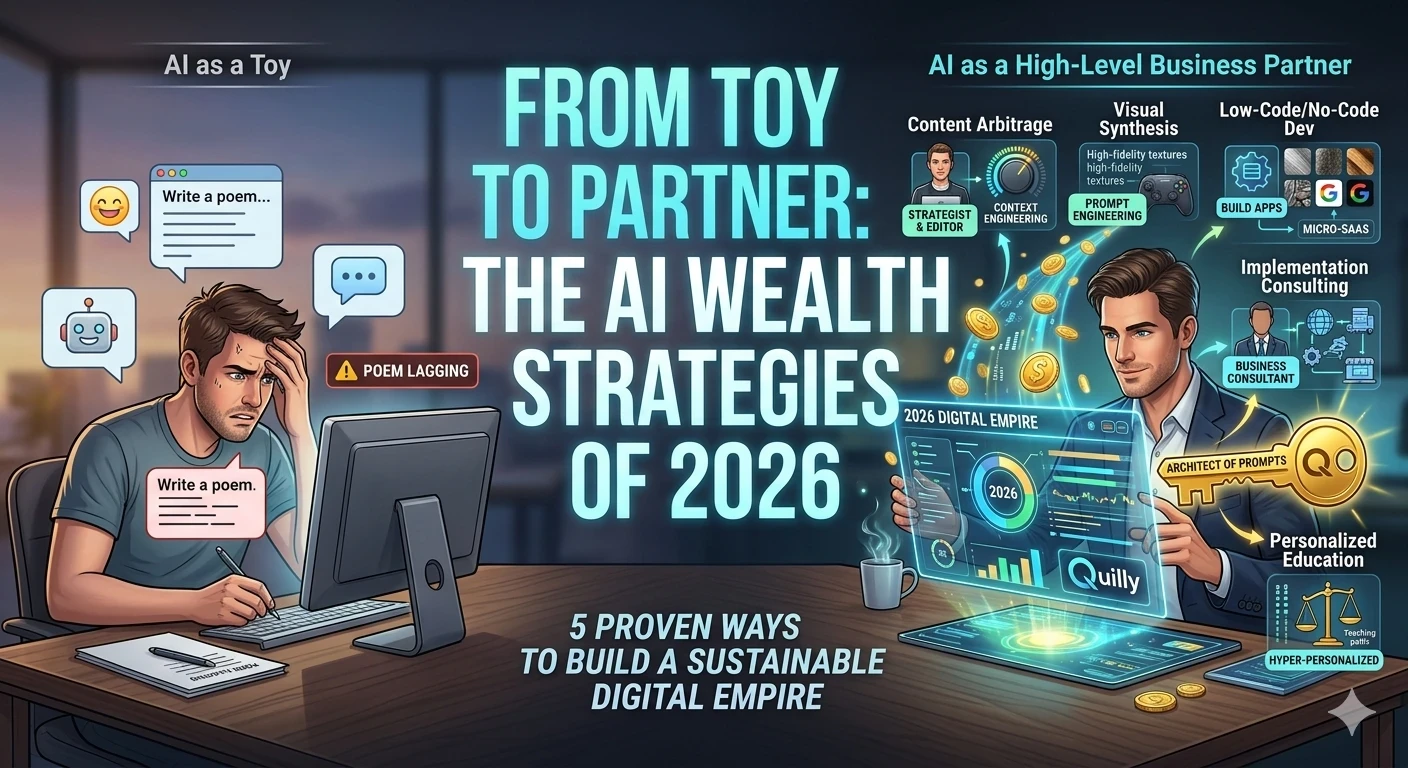
The era of using Artificial Intelligence just for fun or asking simple questions is officially over. As we move through 2026, AI has evolved from a "cool gadget" into the most significant economic engine of the decade. While the average user is still asking AI to write a poem or a joke, the "smart" creators and entrepreneurs are using it to build sustainable digital empires. If you want to stand out on platforms like Quilly, you need to stop viewing AI as a toy and start seeing it as a high-level business partner.
1. AI-Driven Content Arbitrage
The demand for high-quality content has never been higher, but the time required to produce it has traditionally been a barrier. By using advanced Large Language Models (LLMs), you can now act as a high-level strategist and editor rather than a struggling writer. The key is "Context Engineering." By feeding AI specific industry data and unique brand voices, you can produce professional-grade white papers, technical blogs, and deep-dive newsletters that companies are willing to pay thousands of dollars for. The value isn't in the "text generation" but in the curation and strategic alignment that AI allows you to perform at scale.
2. Visual Synthesis and Digital Assets
We have moved past the days when you needed a decade of experience in Photoshop to become a digital artist. Tools like Midjourney and advanced generative engines have democratized the world of design. However, the real profit lies in "Prompt Engineering"—the specialized skill of communicating with the machine to produce exact, high-fidelity results. Professional creators are now making significant revenue by generating unique AI textures for gaming, high-end stock photography, and custom brand identities for startups that need rapid deployment.
3. Low-Code/No-Code Software Development
In 2026, the gap between having a great idea and launching a functional application has virtually vanished. With AI-integrated coding assistants, you can now build functional websites, custom automation bots, and specialized Chrome extensions without being a software engineer. This allows you to sell "Micro-SaaS" (Software as a Service) solutions to small businesses that need specific automation but cannot afford a full-scale development team. You are no longer selling code; you are selling a solution to a problem.
4. Specialized AI Implementation Consulting
Many traditional industries are currently overwhelmed by the rapid pace of AI evolution. They know they need to integrate AI to survive, but they don't know where to start. This has created a massive niche for "AI Implementation Consultants." By learning how to integrate AI tools into a company’s specific workflow—such as automating customer support, optimizing supply chain logistics, or managing data analytics—you position yourself as an indispensable asset in the modern corporate world.
5. Personalized Digital Education and Coaching
The traditional "one-size-fits-all" education model is dying. AI allows you to analyze vast amounts of data to create hyper-personalized learning paths for students or clients. You can build niche educational courses where AI handles the repetitive data processing and grading, allowing you to focus on the high-level human connection and strategic coaching. This scalability means you can teach thousands of students with the same effort previously required for ten.
The digital divide in 2026 is no longer between those who have access to technology and those who don't. It is between those who can command the machine and those who are replaced by it. Wealth in the modern age belongs to the "Architects of Prompts." Start today, experiment with these tools, and turn your creativity into a scalable, AI-powered business.