
في هذا المقال
Remote work is real, and millions of people earn a living online. That is exactly why scammers copy it. A fake job offer can cost you money, your identity documents, or weeks of unpaid work. The good news is that most scams share the same warning signs, and you can learn to spot them in a few minutes.

The offer pays too much for too little
If a message promises a high salary for simple tasks like liking posts, packing parcels from home, or "typing data for two hours a day," slow down. Real employers pay for real skills, and the pay usually matches the market. An offer that looks far better than similar jobs is a reason to ask more questions, not to hurry.
They ask you to pay first
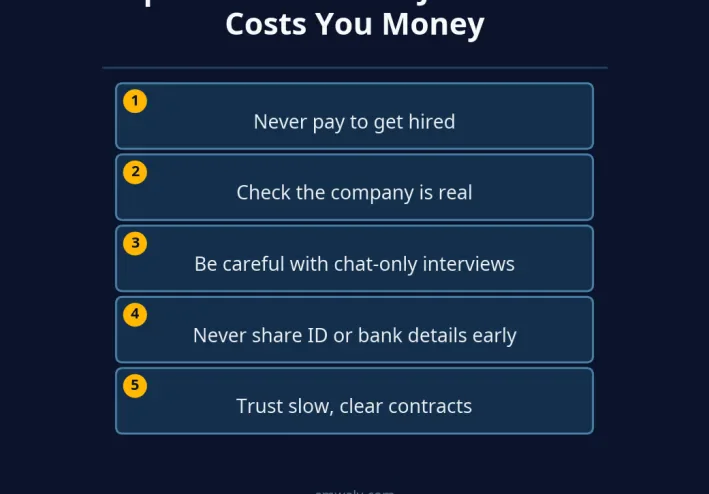
This is the clearest red flag. A real employer pays you; you do not pay them. Be careful with any "registration fee," "training kit," "software license," or "refundable deposit" requested before you start. Legitimate companies do not charge candidates to hire them.
The company is hard to verify
Search for the company name together with the word "scam" or "reviews." Check that it has a working website, a real address, and a professional email on its own domain, not a free webmail address. Look for the recruiter on a professional network and see whether the company lists that person as an employee. Be careful with job posts that only exist as one private message.
The interview happens only in a chat app
Many scams run entirely through messaging apps, with no video call, no named manager, and no written contract. A real hiring process normally includes a call or video interview, a clear job description, and a written offer that names your role, pay, and working hours.
They want sensitive information too early
Before you are hired, no one needs your national ID, your bank login, or a photo of your card. Employers may ask for banking details only for payroll, after you have signed a contract. Never share passwords or one-time codes with anyone, for any reason.
Strange payment tasks
Some scams ask you to receive money into your account and forward it, or to buy gift cards and send the codes. These tasks can make you part of a fraud, even if you did not know. Refuse any job that involves moving someone else's money.
What to do if you spot one
Stop replying, keep the messages as evidence, and report the account to the platform where it contacted you. If you paid anything, contact your bank or payment provider quickly. Then tell friends who might be looking for work.
A quick checklist
Before you accept, ask yourself: Can I verify the company? Is there a written contract? Am I being asked to pay or to share sensitive data? If any answer feels wrong, walk away. A real opportunity will still be there after a day of careful checking.
تابع جديد Eng Abdo Mahrous Nour
اختر إشعارات الموقع أو البريد أو الاثنين. الزائر يقدر يشترك ببريده دون تسجيل حساب.
ادعم الكاتب
أعجبك المقال؟ أرسل هدية إلى Eng Abdo Mahrous Nour
هديتك تصل إلى الكاتب مباشرة وتتحول إلى أرباح في محفظته.
كن أول من يدعم هذا المقال بهدية 💝
كيف تعمل أرباح الهدايا؟الإبلاغ عن المقال
لو لاحظت مشكلة في المحتوى، أرسلها لفريق المراجعة. لن تظهر بياناتك لكاتب المقال أو للقراء.
تعذّر إرسال البلاغ الآن. حاول مرة أخرى لاحقًا.
سجّل الدخول لإرسال بلاغ




النقاش
التعليقات (0)
فكرة تضيفها، أو سؤال يفتح حوارًا.
الرجاء تسجيل الدخول لتتمكن من التعليق