

في هذا المقال
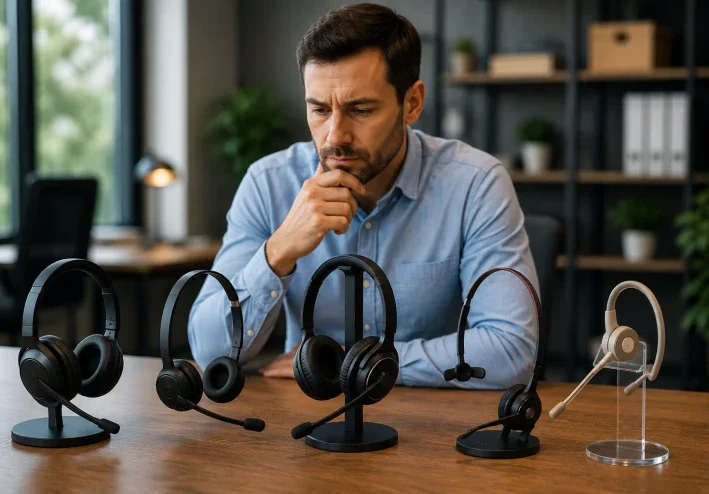
Why does the headset look excellent on paper but bad in your ear?
A practical guide to choosing headphones: the differences between types, how to read specifications, and why the headphones' performance is more important than any number on the box.
Many people buy headphones based on a review they read or a catchy number printed on the box, only to discover two weeks later that they don't like the sound without knowing exactly why. The problem is rarely the quality of the headphones themselves, but rather that the criteria they used to make their decision don't measure what truly matters when listening.
The specifications printed on the box describe the device's capabilities in theory, but they don't tell you exactly how you'll hear it. That's why specialized audio stores, including Dr.Head in Dubai, rely on listening rooms where customers can try out several models consecutively, rather than just a list of specifications.
The idea is simple: the ear isn't a measuring device, and head shape, ear size, and even wearing glasses all change how sound reaches you. Two people buying the same model might come away with completely opposite opinions, and both would be telling the truth.
The three types and what suits each one
In-ear headphones fit inside the ear canal and provide excellent passive noise isolation due to their physical seal, making them ideal for commuting and sports. Over-ear headphones rest on the ear canal and remain lightweight, but they leak sound in both directions. Over-ear headphones completely enclose the ear canal and generally offer the widest soundstage, but they are heavier and generate more heat with prolonged use.
Specifications that are truly worth paying attention to
The frequency response range, written in the format 20 Hz to 20 kHz, appears on almost every box and doesn't differentiate one device from another, as it doesn't mention anything about sound distortion within this range. The most important number practically is impedance: high-impedance headphones require an amplifier to function at their full potential, and connecting them directly to a phone produces weak sound that the buyer might mistake for a defect.
Passive insulation and noise cancellation are not the same thing.
Passive noise cancellation relies solely on physical sealing and works against loud, high-pitched sounds. Active noise cancellation uses external microphones to generate an opposing wave and is effective against constant low frequencies such as engine roar or air conditioner hum. Neither cancels out the sound of a crying baby or sudden conversation, and advertising often ignores this difference.
Wireless and audio encoding
Bluetooth audio quality is determined by the codecs supported by both your phone and headphones. iPhones use AAC, while most Android phones use aptX or LDAC, which transmit more data. Buying a more expensive headset just for LDAC support is pointless for iPhone owners. Check what your phone supports before paying extra for a feature that won't work.
Define your needs before setting your budget.
The first question isn't how much you'll spend, but where you'll listen. Someone who spends an hour a day commuting needs good sound isolation and a battery that lasts a week; they might not benefit at all from open-back reference headphones designed for sitting in a quiet room. And someone recording or editing needs a response that's as neutral as possible, not amplified sound at both ends that makes every recording sound better than it actually is. Defining your intended use first immediately eliminates half the options and makes comparison much easier.
Before you pay
Be wary of battery life figures; they're measured at medium volume with noise cancellation off, meaning they're an optimistic estimate, not a realistic one. Remember that the speaker's diameter, despite being prominently displayed on the packaging, doesn't indicate sound quality. Counterfeiting is a real problem with well-known brands, and a local warranty registered with an authorized distributor is the only practical protection against it.
Ultimately, there's no single best model; it's about finding the one that suits your ear, your playback source, and the type of music you listen to. One hour of comparative testing on familiar tracks is more effective than a month of reading reviews.
تابع جديد خدمه نشر اموالي
اختر إشعارات الموقع أو البريد أو الاثنين. الزائر يقدر يشترك ببريده دون تسجيل حساب.
الإبلاغ عن المقال
لو لاحظت مشكلة في المحتوى، أرسلها لفريق المراجعة. لن تظهر بياناتك لكاتب المقال أو للقراء.
تعذّر إرسال البلاغ الآن. حاول مرة أخرى لاحقًا.
سجّل الدخول لإرسال بلاغ




النقاش
التعليقات (0)
فكرة تضيفها، أو سؤال يفتح حوارًا.
الرجاء تسجيل الدخول لتتمكن من التعليق