


In this article
Beyond the Screen: Secrets of the Hidden World and What Lies Behind the Dark Internet?
Introduction
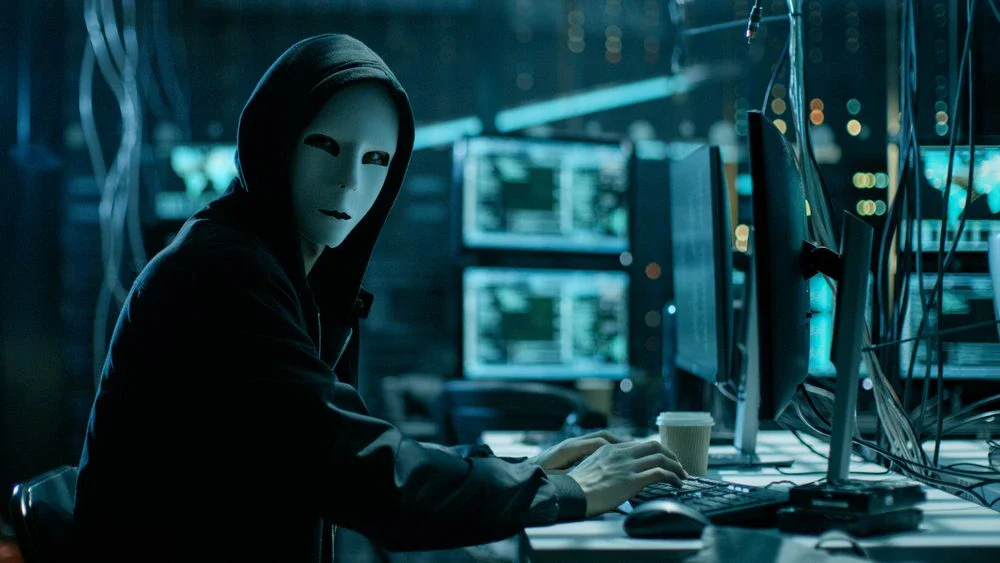
We all navigate our daily routines online with the press of a button; we browse the news, buy necessities, and exchange messages through social media platforms. But the digital reality we interact with represents only the tip of the iceberg floating above the ocean. Beneath this seemingly calm and organized surface, vast digital depths extend, where data and information are distributed far from the eyes of traditional search engines. And at the farthest reaches of these depths lies what is known as the Dark Web or the dark network; it is the most mysterious and controversial space of the modern era. So what is the nature of this hidden world? How does it work? And is it really merely a hotbed of digital crime, or does it have another side that we do not see?
First: The Digital Map (Where Is the Dark Web Located?)
To unravel the mystery of this network, we must first understand the structure upon which the global Internet is built, which is technically divided into three main layers:
Surface Web:
It is the visible part understood by everyone, which search engines such as "Google" and "Bing" index. It includes news websites, public forums, and online stores. The surprise is that this familiar part accounts for no more than 5% to 10% of the total size of the actual Internet.
Deep Web:
It constitutes the bulk of the network's size (more than 90%). It consists of unindexed pages and data that can only be accessed through specific permissions, such as: bank databases, personal email, medical records, and closed academic subscriptions. This part is safe, legal, and essential to the functioning of institutions.
Dark Web:
It is a specific and carefully hidden subdomain within the Deep Web. It cannot be accessed using ordinary browsers such as Google Chrome or Safari, but requires special encrypted browsers and technologies, most notably the Tor browser (The Onion Router).
Second: Mechanisms of Concealment and Operation in the Shadows
The core technology of the Dark Web relies on the "Onion Routing" protocol. This technology was given this name because the data is wrapped in multiple layers of encryption like the layers of an onion.
When you try to visit a website on the Dark Web, your data does not travel directly from your computer to the site's server, but instead passes through volunteer servers around the world called "Nodes". The data is encrypted and partially decrypted at each stage, making it nearly impossible for any external or governmental entity to track the user's identity, determine their true geographic location, or know who operates the site itself.
Third: Behind the Scenes of the Dark Web.. Between Crime and Necessity
This high level of anonymity has created a dual-use environment, divided into two completely contradictory sides:
1. The Dark Haven (the illicit side):
This side constitutes the most famous and media-sensationalized part. Absolute secrecy is exploited to create digital black markets used to trade leaked data, software vulnerabilities, and ready-made hacking tools. Stolen subscription and credit cards are also sold there, and all financial transactions are conducted using cryptocurrencies (such as Bitcoin and Monero) to ensure that the money is difficult to trace.
2. A Tool for Protection and Freedom (the legitimate side):
On the other hand, encryption was not originally designed to support criminal activities. The Dark Web is a true lifeline for many journalists, political activists, and whistleblowers who live in countries that impose strict Internet censorship and suppress freedom of expression. This network provides a safe space for leaking important documents and publishing facts without fear of tracking or arrest.
Fourth: Between the Hollywood Myth and Technical Reality
Cinema and fiction have contributed to weaving an aura of horror and fantasy around the Dark Web, portraying it as a world filled with live broadcasts of crimes and closed red rooms. But from a technical and security perspective, most actual activity on the Dark Web boils down to exchanging information, trading financial and technological data, and publishing on closed forums. Browsing there is also very slow due to the multiple layers of encryption, making high-quality live streaming technically almost impossible.
Conclusion
In the end, the Dark Web remains a mirror reflecting the dual nature of modern technology. The same technology used to protect privacy and freedom of expression is also exploited to evade the law. Understanding this hidden world does not mean encouraging people to enter it, but rather gives us a deeper awareness of the importance of cybersecurity and how to protect our personal data in this digital world whose eyes never sleep.
Keep up with Safwat ITM
Choose site notifications, email, or both. Guests can subscribe by email without an account.
Report this article
Tell our review team about a problem with this content. Your details will not be shown to the author or other readers.
Your report could not be sent. Please try again later.
Sign in to report an article






Discussion
comments (0)
Share a perspective. Start a thoughtful conversation.
please login to be able to comment