
In this article
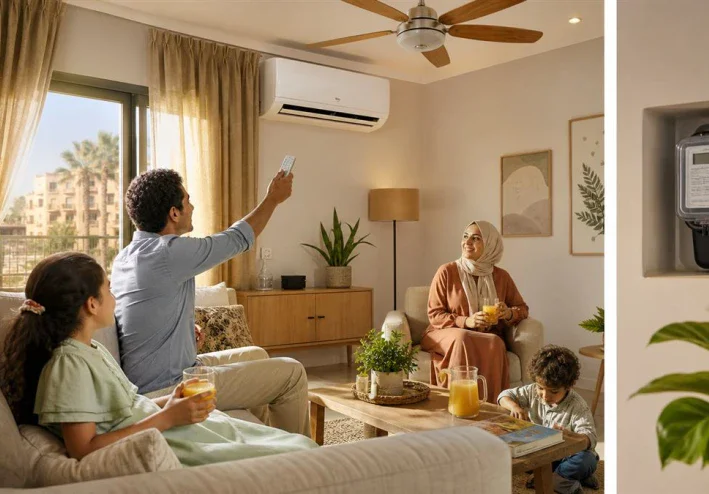
How to Reduce Your Electricity Bill in Summer: 12 Effective Ways to Save Energy
Household electricity consumption usually increases during summer because air conditioners, fans, refrigerators, and other appliances operate for longer periods. Many people are surprised by a higher bill even though they believe their daily habits have not changed significantly.
Small habits can waste a considerable amount of electricity. Fortunately, several simple steps can reduce unnecessary consumption without forcing your family to give up comfort or stop using essential appliances.
Set the Air Conditioner to a Suitable Temperature
Setting the air conditioner to an extremely low temperature does not necessarily cool the room faster. Instead, it may force the appliance to operate for longer and consume more electricity.
The Egyptian Electricity Holding Company recommends setting the temperature to 25 degrees Celsius or higher. A fan can also help circulate cool air throughout the room, allowing the air conditioner to work more efficiently.
Close Doors and Windows
Cold air escaping from the room forces the air conditioner to continue operating to compensate for the loss. Make sure that doors and windows are properly closed whenever the appliance is running.
Curtains can also block direct sunlight and reduce heat inside the room. Official energy-efficiency guidance indicates that closing air-leakage points and shading the room can reduce the need for continuous air-conditioner operation.
Clean the Air-Conditioner Filter Regularly
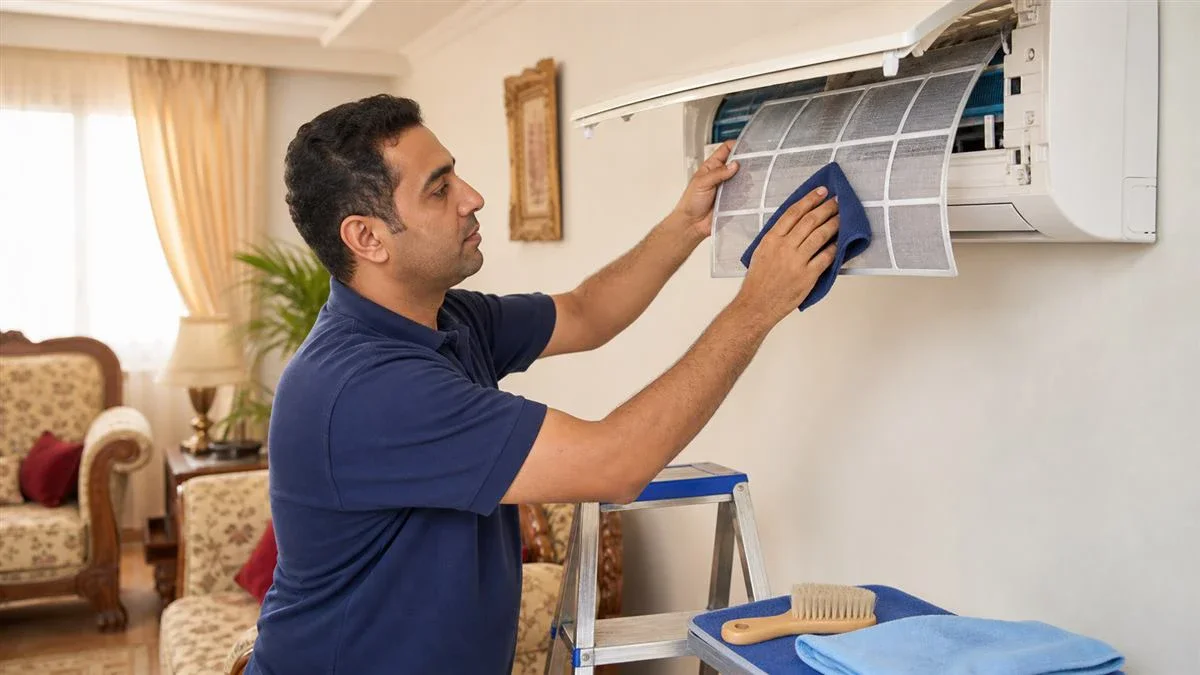
Dust accumulating on the filter restricts airflow and reduces cooling efficiency. This causes the appliance to operate for longer periods. Clean the filter regularly according to the manufacturer’s instructions.
Disconnect the appliance before handling the filter. Do not remove internal components or touch electrical wiring. If the air conditioner requires more than routine filter cleaning, contact a qualified technician.
Insert the internal image here.
Choose the Correct Air-Conditioner Capacity
An undersized air conditioner may operate continuously without reaching the desired temperature. A unit that is much larger than necessary may also fail to provide the best efficiency.
Before buying an appliance, ask a specialist to determine the correct capacity based on room size, location, and exposure to direct sunlight. You should also check the energy-efficiency label attached to the appliance.
Use a Fan When the Weather Allows
A fan may provide sufficient comfort during cooler hours. You can also use it briefly with the air conditioner to distribute cool air before reducing the air-conditioner setting or switching it off.
Turn the fan off when leaving the room. A fan moves air around people but does not continue cooling an empty room.
Do Not Cool an Empty Room
Leaving the air conditioner running in an empty room is one of the most common causes of unnecessary consumption. Switch it off before leaving and use the timer feature if you normally sleep while it is operating.
Close the doors of unused rooms so that cooling remains concentrated in the occupied area.
Monitor Refrigerator Use
A refrigerator operates throughout the day, which means inefficient habits can noticeably affect consumption. Avoid opening the door unnecessarily or leaving it open for long periods.
Organize food so that items can be found quickly. Do not place hot meals directly inside the refrigerator, leave enough space for ventilation, and keep the appliance away from sunlight and other heat sources.
Run the Washing Machine With a Suitable Load
Running the washing machine with only a few items can result in additional washing cycles and unnecessary electricity and water consumption.
Wait until you have a suitable load without exceeding the machine’s capacity. Use cold water when appropriate, and disconnect the appliance if it will not be used for an extended period.
Replace Old Light Bulbs
Energy-efficient bulbs consume less electricity than traditional bulbs and usually last longer. Take advantage of natural daylight and switch off lights when leaving a room.
You can also divide room lighting between several switches. This allows you to illuminate only the area you need instead of turning on every bulb.
Avoid Leaving Appliances in Standby Mode
Some televisions, computers, and entertainment devices continue consuming electricity while in standby mode.
Switch appliances off completely when they are not needed and unplug chargers after use. A safe power strip with an on-and-off switch can help disconnect several devices together, provided that it is suitable for the connected electrical load.
Use the Electric Water Heater Only When Needed
Keeping an electric water heater running throughout the day causes heat loss and repeated reheating. Switch it on shortly before use and turn it off when hot water is no longer required.
Do not adjust the thermostat or open the heater yourself unless you are qualified. Ask a specialist to inspect and adjust it to avoid electrical and water-related risks.
Review Your Habits Before Buying New Appliances
Before purchasing a product advertised as energy-saving, monitor your household consumption and identify appliances that operate for long periods.
The problem may be a simple habit, such as using the air conditioner while a window is open or leaving the water heater running continuously.
When purchasing a new appliance, compare its energy-efficiency rating, capacity, and suitability for your actual needs. Do not rely entirely on advertising claims.
Conclusion
Reducing your electricity bill does not require switching off every appliance or enduring uncomfortable summer temperatures. The goal is to use appliances efficiently, prevent cold-air leakage, maintain the air conditioner, monitor refrigerator use, and switch off devices that are not needed.
Apply several of these steps for one month, then compare your electricity consumption with the previous period. Consistent energy-saving habits usually produce better results than temporary solutions.








Discussion
comments (0)
Share a perspective. Start a thoughtful conversation.
please login to be able to comment